
Mapping your lead generation strategy visually shows how every channel connects, which tactics are wasted effort and where to redirect them. Commit to a fixed weekly time for lead generation, then build a visual map of your chosen channels so everything works together.
Life is busy, and it's unlikely to get quieter. When you have a million things to do, keeping track of your lead generation strategy is hard, especially if it only lives in your head.
Why visualise a lead generation strategy?
A visual map makes your strategy, goals and pathways clear. It shows how channels feed each other, where effort is being wasted and what isn't being used yet.
What does a visual lead generation strategy look like?
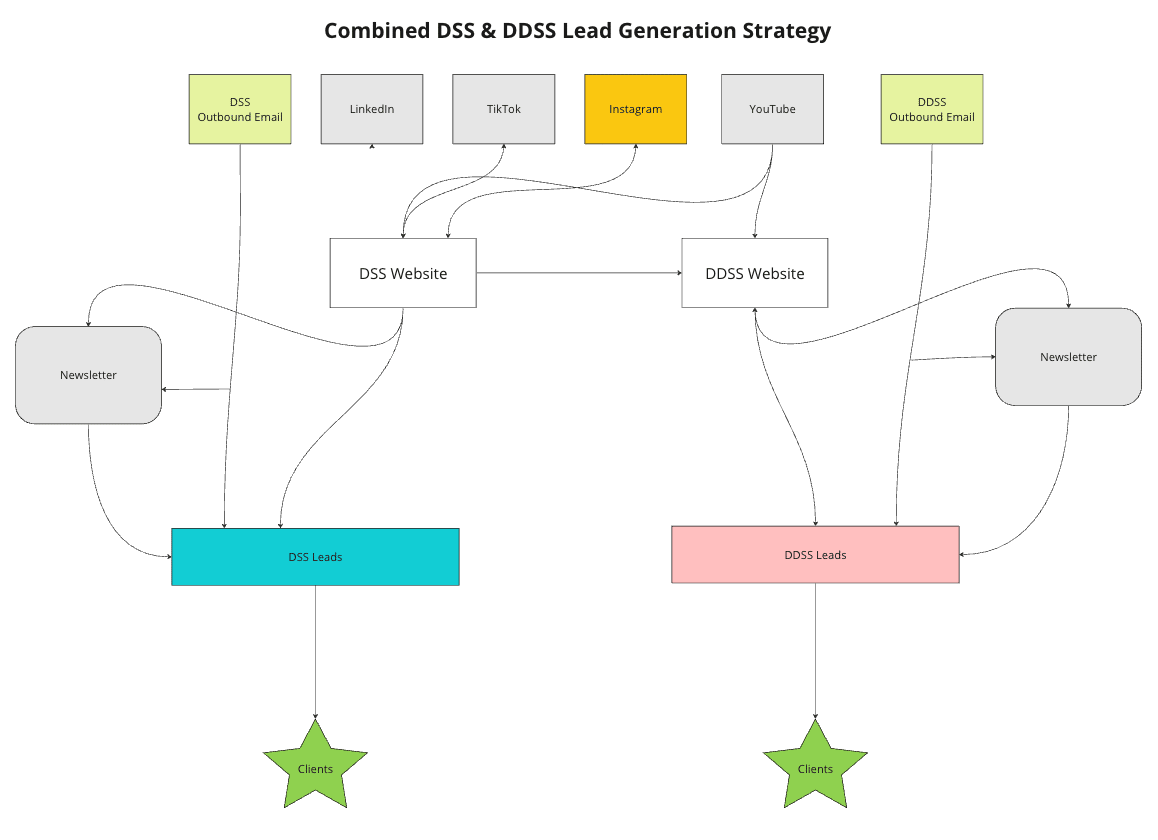
This is a real map from a client:
- They have two divisions in the business
- Resources are limited, so the grey boxes aren't fully used yet
- Some tactics, like TikTok, were leading nowhere, so arrows redirect them to key assets such as the website
- The map shows how both divisions' strategies work together
They chose six tactics suited to their markets from more than twenty options.
How do you build your own?
- Commit to a dedicated amount of weekly lead generation time
- Choose a handful of channels that suit your buyers
- Draw how each channel leads to the next step and your conversion points
- Remove or redirect anything that doesn't connect
For help choosing the mix, read how to build a B2B lead generation strategy.
Frequently asked questions
Why should I map my lead generation strategy?
A visual map shows how your channels connect, highlights wasted effort and makes the strategy easier to manage and share with your team.
How many lead generation channels should a B2B business use?
Usually a focused handful. In one example, a client chose six channels from more than twenty options.
What should a lead generation map include?
Your channels, the assets they lead to (like your website or webinars), conversion points and how each division or segment connects.
What if a channel isn't generating leads?
Redirect it to support a channel that converts, or remove it to free up limited resources.